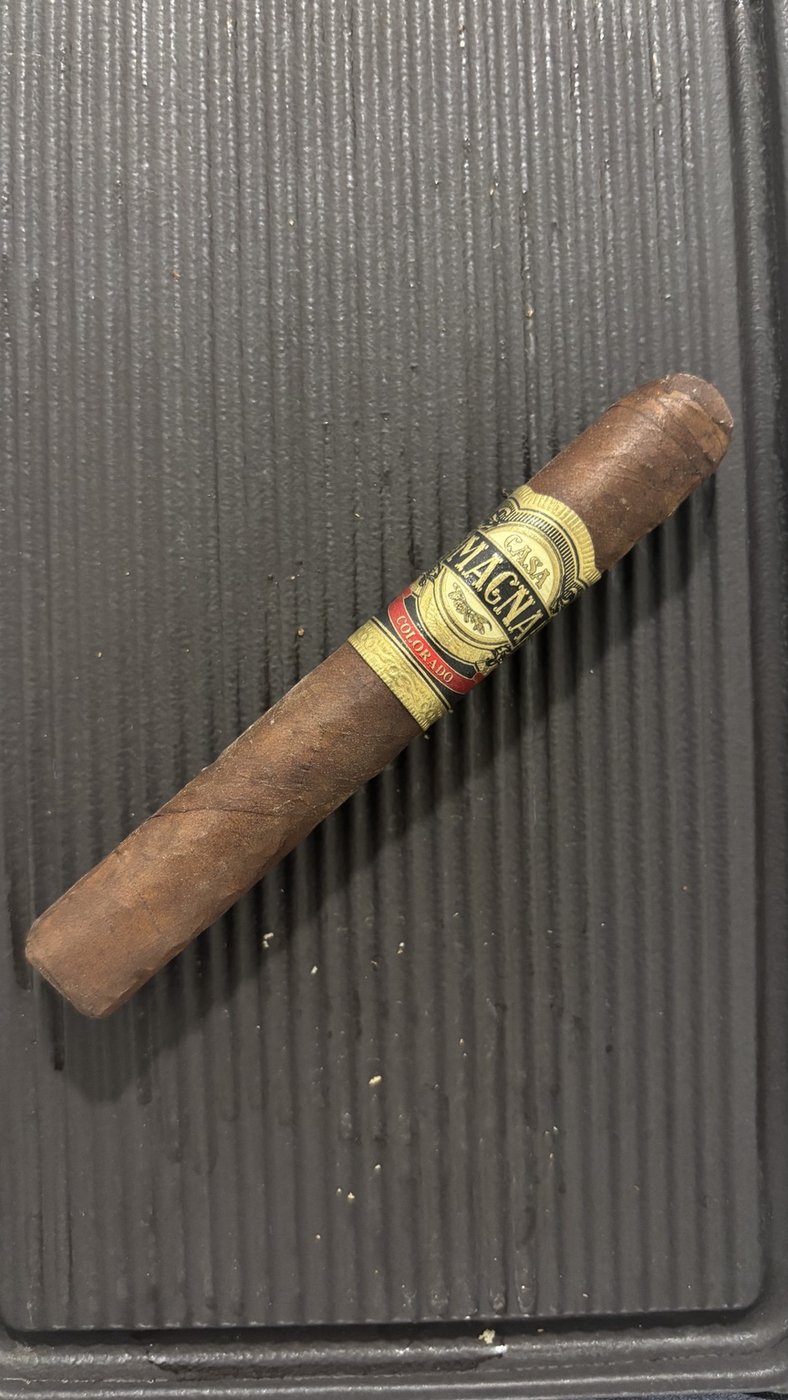
- Cigar
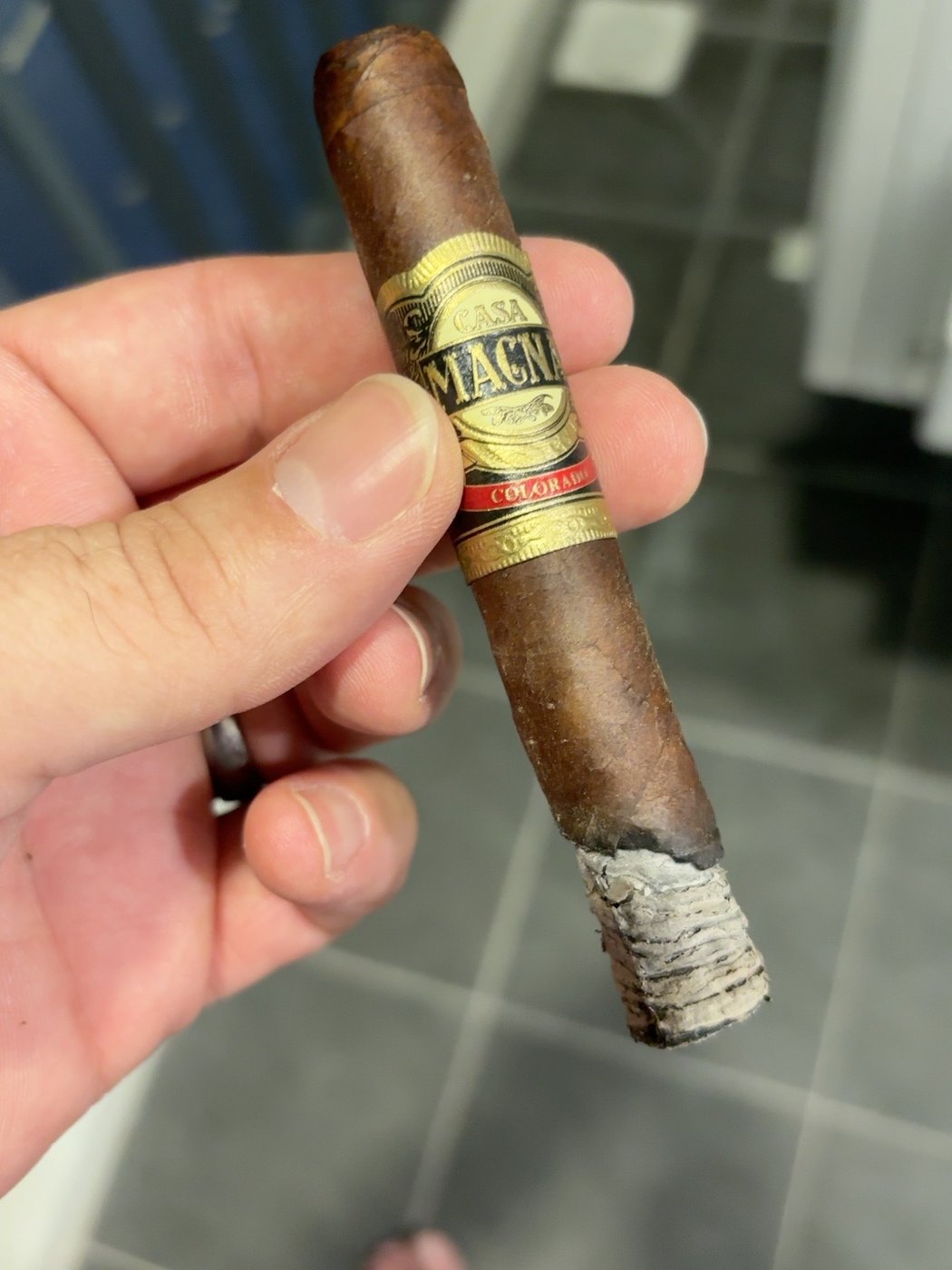
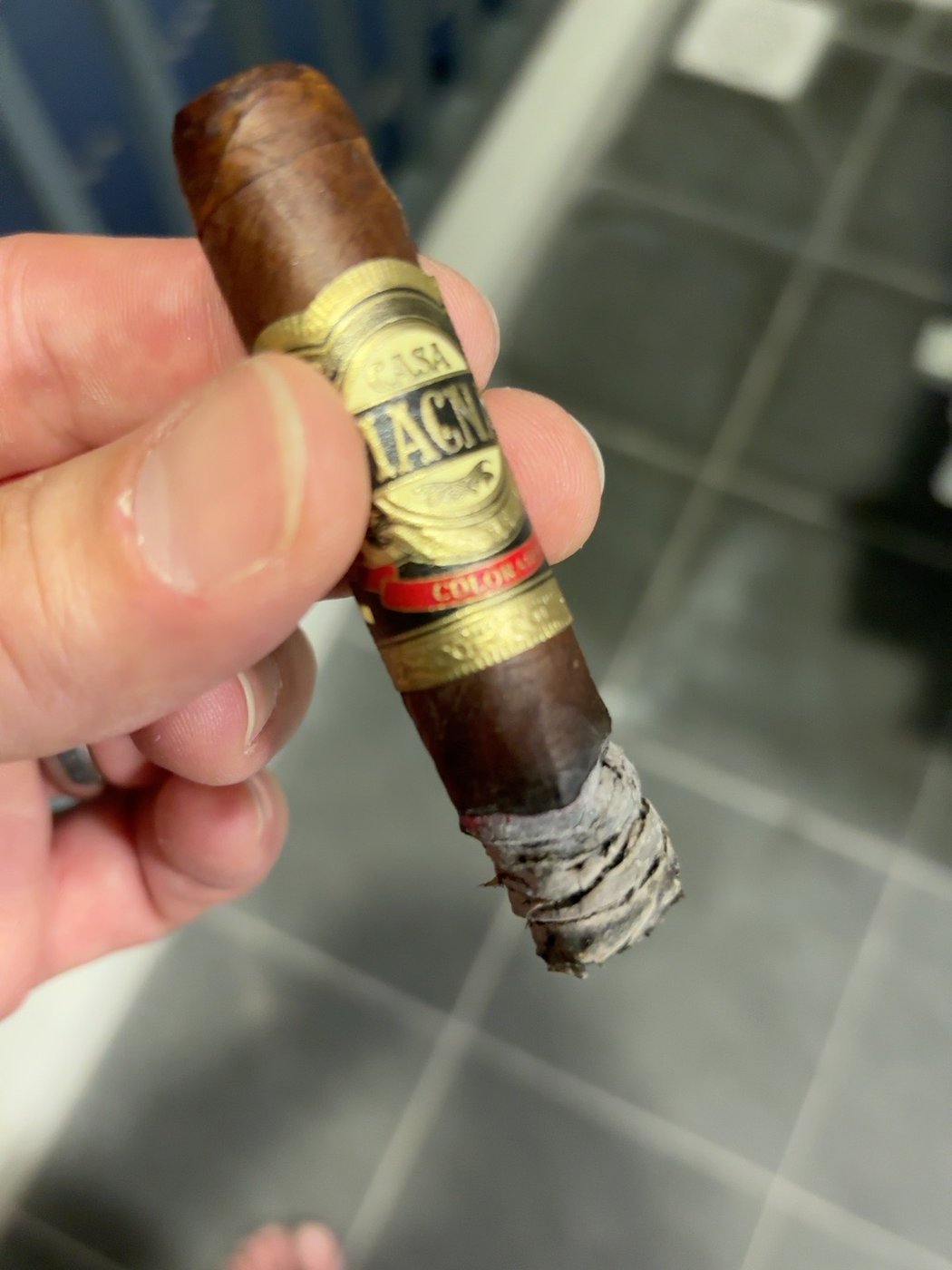
- Casa Magna Colorado Pikito
- Wrapper
- Colorado
- Origin
- Nicaragua
- Format
- Pikito, 4¾ × 42
- Partner
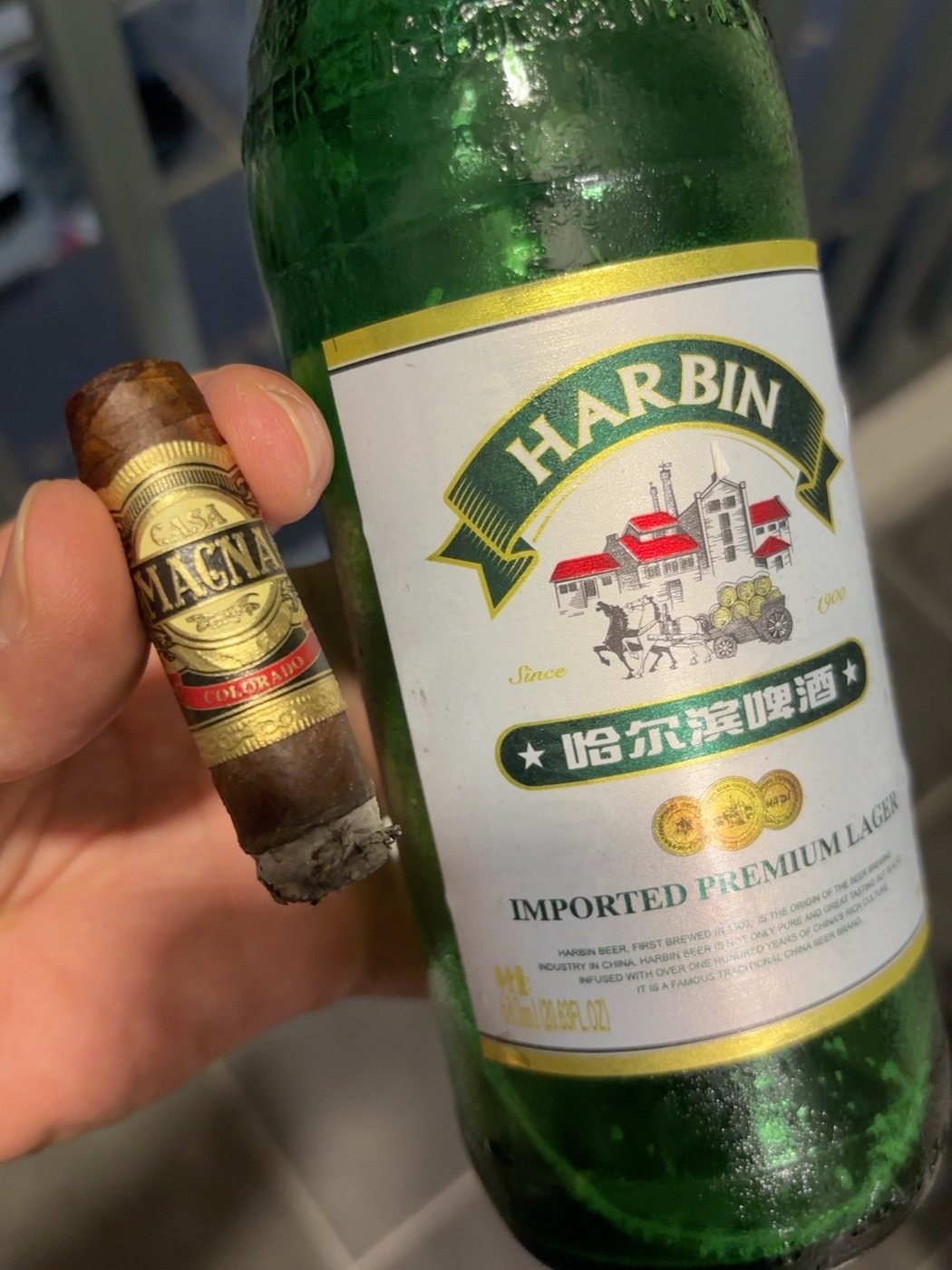
- Harbin Premium Lager
I remember when the Casa Magna Colorado Robusto was named Cigar Aficionado’s Cigar of the Year in 2008. It scored 93 points and cost $5.25—a price that seems almost improbable now. Manuel Quesada and Nestor Plasencia had made a Nicaraguan cigar that was powerful without being blunt. I’ve admired Quesada’s blends for years, including the wonderfully balanced mild cigars he made under the Fonseca name.
So when I came across an entire box of Casa Magna Colorado in Malaysia, I bought a little one. At $10, the Pikito was hardly the inexpensive everyday cigar I remembered. But I wanted to know whether that old sense of balance was still there.
It was. And in this slender format, it had more to say than I expected.
The cigar, at a glance
- Format: Pikito, 4¾ × 42 (likely identification from size and appearance)
- Blend: Nicaraguan wrapper, binder, and filler
- Collaboration: Manuel Quesada and Nestor Plasencia
- Body: Medium to full
- Nicotine strength: Pronounced, especially late in the smoke
- Smoking time: Approximately 55–60 minutes (estimated from the tasting session)
- Draw: Traditional resistance
- Burn: Uneven; required several small touch-ups
- Price paid: US$10 in Malaysia
- Pairing: Harbin Premium Lager
Before the flame
The unlit cigar was unapologetically rustic. Leather dominated the wrapper aroma, followed by damp earth, musk, and a faint barnyard impression. The cold draw echoed the leather and soil, with a touch of bitterness and a comfortable, traditional resistance.
There was little in this opening to suggest the remarkable delicacy waiting at the end.
First third: The dark opening
The first light greeted me with sweet toast and cinnamon. On the palate came savory herbs, woody spice, roasted tobacco, and a gently oily sensation on the lips. The smoke was generous and turned creamy almost immediately. Most pleasing was the transformation within a single draw: savory and woody on entry, then a natural tobacco sweetness on the long finish.
The earth and leather were still there, framing the toast and sweetness rather than overwhelming them. The ambient aroma was pleasant—delicately sweet and toasted—though initially less expressive than I would have liked. Through the retrohale, earth and woody spice grew steadily more assertive.
Imagine a symphony opening in a minor key. Deep basses establish a dark, muscular foundation. This was that opening: serious, earthy, and resonant, yet already displaying hints of warmth.
Second third: Two voices, one composition
Then the cigar began to change registers.
Creamy coffee and roasted nuts emerged, accompanied by a vanilla-like sweetness that seemed to linger well beyond each puff. At moments the aroma itself suggested vanilla bean. The earth receded, and the cigar acquired a softer, more rounded expression.
But a second voice continued alongside it. Leather and oak returned, and the retrohale developed a remarkable succession of spice: clove-like warmth, red pepper, and finally a sharper, toasted-wood impression with white pepper. The intensity rose, but the underlying balance remained.
What fascinated me was the contrast. One aspect of the cigar was rustic, muscular, and heavily spiced; the other was delicate, nutty, creamy, and sweet. Neither felt pasted on. They belonged to the same blend, taking turns at the front of the palate.
There is a difference between a cigar with many flavors and a cigar with a coherent composition. This one had both.
Final third: An ascending modulation
Ordinarily, I expect a strong, slender cigar to become heavier as the burning end approaches the head. The Casa Magna did the opposite.
Oak gave way to cedar. Its toasted character took center stage: roasted nuts, sweet wood, and creamy coffee. The sweetness became more restrained, but the finish remained extraordinarily long. A hint of cocoa appeared late. The once-forceful retrohale lost its sharp spice and became warm, toasted, and deeply aromatic.
The cigar was still medium-to-full-bodied and carried enough nicotine to be unmistakably strong. Yet the flavors became more lifted, articulate, and refined. I would hesitate to say cleaner, because the dark opening had not been dirty or flawed. The blend simply moved from dense bass notes into a clearer, higher register.
That was its paradox: the power remained, but the expression became delicate.
Even at the nub, there was no harshness or unpleasant bitterness. The final draws still offered coffee, roasted nuts, cocoa sweetness, and beautifully defined cedar. It was almost impossible to put down.
Construction: The honest criticism
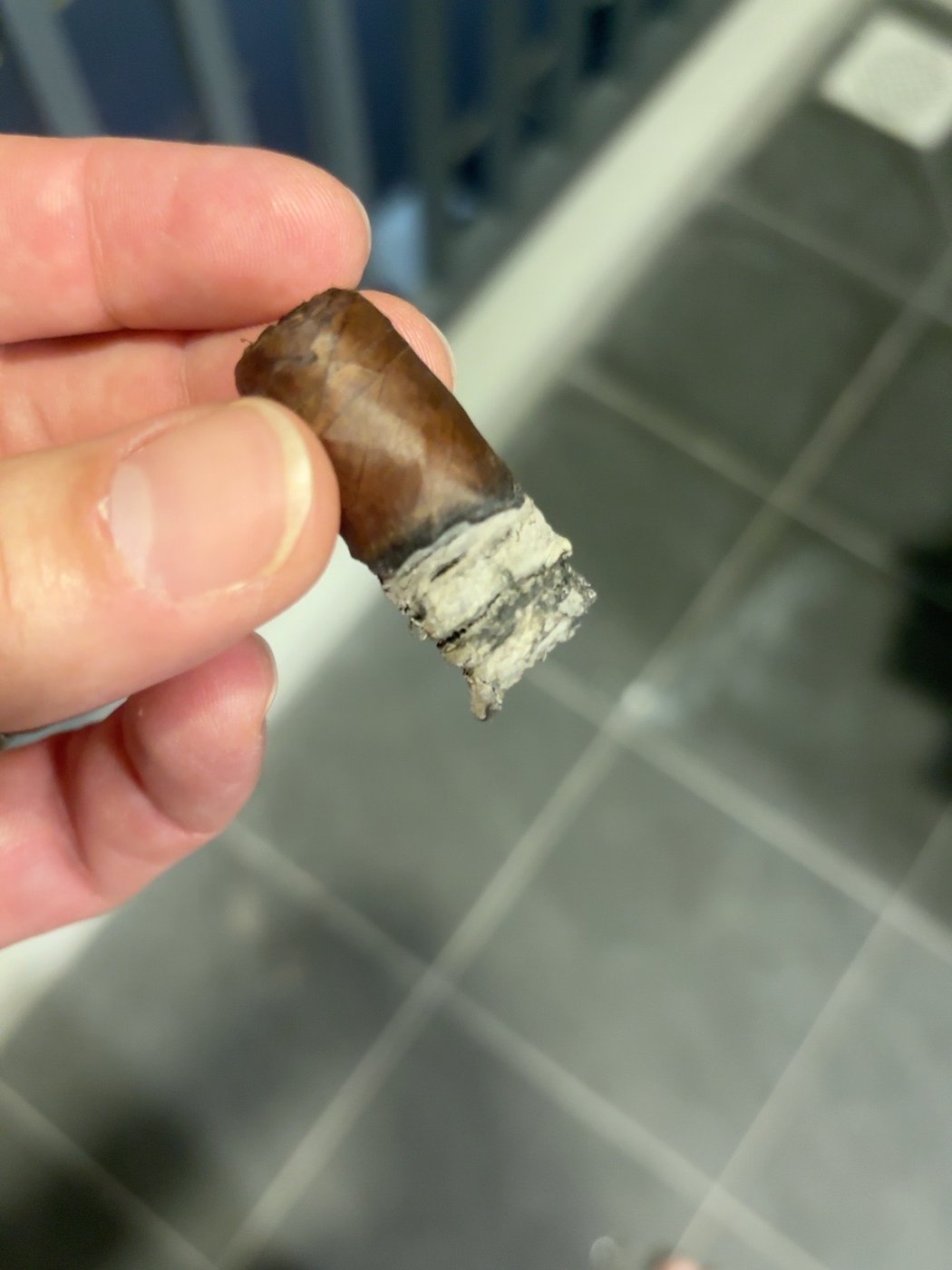
The draw remained comfortable and the smoke production was ample. Ash accumulated in pale, layered sections and once held for approximately three-quarters of an inch to an inch before dropping naturally.
The burn, however, was not immaculate. Its line wandered, and I corrected it several times rather than allowing it to burn increasingly crooked. In a small format, I preferred to keep combustion even and give the blend its best chance to express itself. Those interventions were a real construction weakness, not something to disguise with enthusiasm for the flavors.
I would also have welcomed a more pronounced room aroma. The sweet toast and vanilla notes were lovely, but never quite as expansive as the palate.
Neither shortcoming prevented this from being an exceptional smoke.
The pairing: Harbin Premium Lager
My unexpected companion was Harbin Premium Lager. It had more body and flavor than I anticipated from a mainstream lager, with a yeasty, bready malt character that met the cigar’s toasted nuts and coffee beautifully.
The important thing is what the beer didn’t do: it didn’t flatten the cigar, exaggerate the bitterness, or rewrite the experience. Its maltiness offered a quiet counterpoint while the carbonation refreshed the palate. This wasn’t a dramatic pairing; it was a harmonious one.
Closing argument
I have always respected Manuel Quesada for understanding that balance is not a synonym for mildness. A mild cigar can be wonderfully expressive, and a powerful cigar can be elegant. Casa Magna Colorado belongs to that second category.
In roughly an hour, this modest little cigar moved from damp earth, leather, and musky oak to creamy coffee and vanilla, then finished on toasted cedar, roasted nuts, and cocoa. It stayed flavorful, remarkably smooth, and compelling to the last inch—indeed, to the last few millimeters.
At $10, the Pikito is a treat rather than a bargain. If I could find it for three or four dollars, it would be an easy staple for the humidor: compact, complex, and deeply satisfying when an afternoon doesn’t allow for a longer smoke.
Highlights: Outstanding flavor progression; a layered contrast of dark and delicate notes; creamy texture; exceptionally persistent finish; no late-stage harshness.
Reservations: Repeated burn corrections; ambient aroma less expressive than the palate; considerable nicotine strength for the size.
Verdict: A gem. A little firecracker whose finest trick is not how much flavor it carries, but how gracefully it carries it.
The cigar began in darkness and ended in a higher register. The composition never lost its center.
Blend and history
The Casa Magna Colorado Robusto—not this Pikito—was Cigar Aficionado’s 2008 Cigar of the Year, scoring 93 points at a listed $5.25. The original collaboration used Nicaraguan tobaccos and was made at Plasencia’s Segovia factory; the production location of this particular Pikito has not been independently verified. The Pikito format is listed as 4¾ × 42 by cigar retailers.
Photo credit: Mike Chimera. Editorial note: Observations come from one personally purchased cigar, smoked October 22, 2026. Duration is estimated from the session timeline rather than stopwatch timing.